When tornado season arrives and severe weather threatens your community, one decision matters above everything else: whether the storm shelter you chose was built to truly protect your family. The market is flooded with shelters making bold claims, but only two certification benchmarks reliably separate the best from the rest – FEMA P-361 and ICC-500.
Understanding what these standards demand, and why compliance matters so deeply, is the most important research any homeowner, school administrator, or small business owner can do before making a purchase.
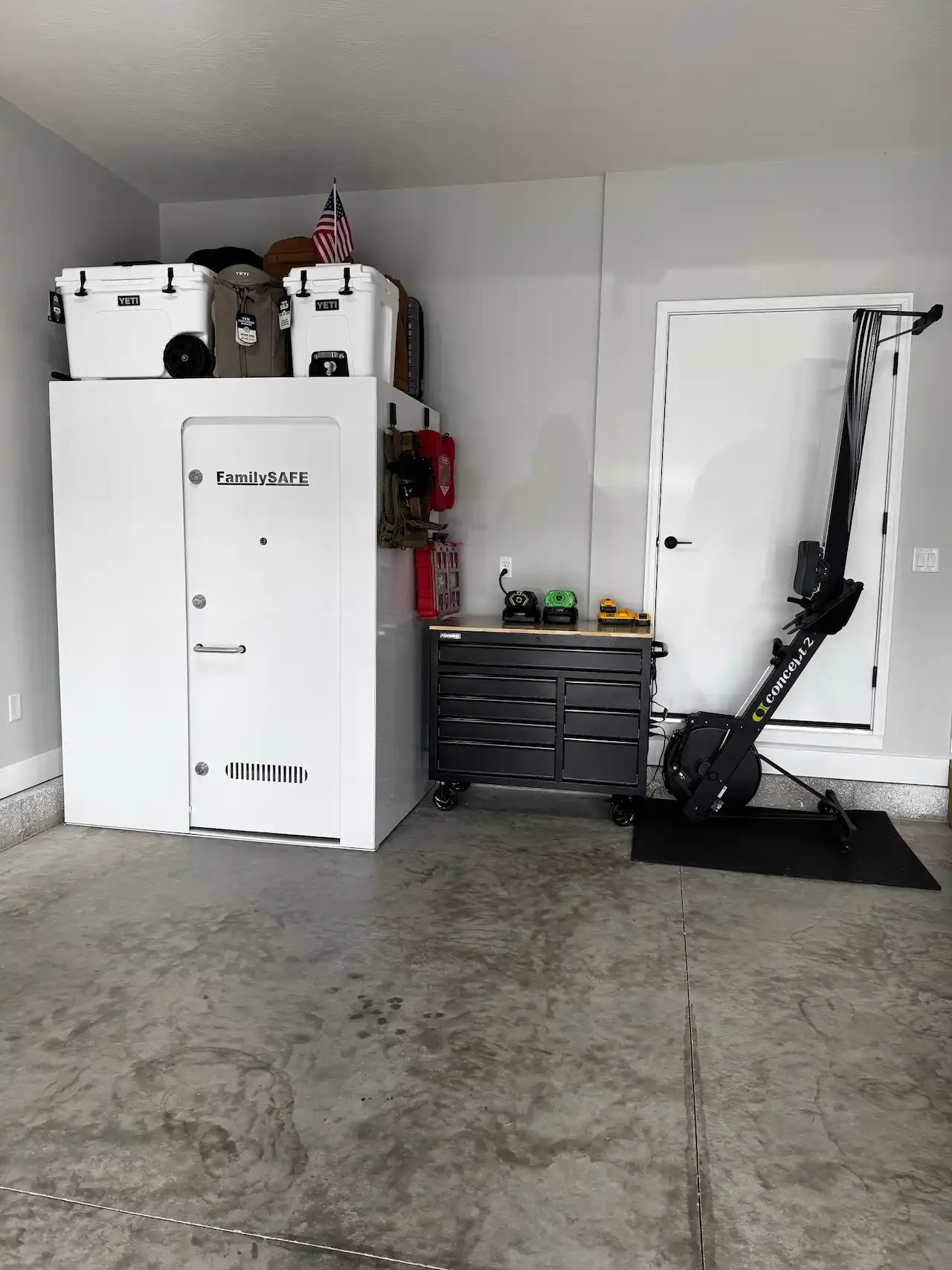
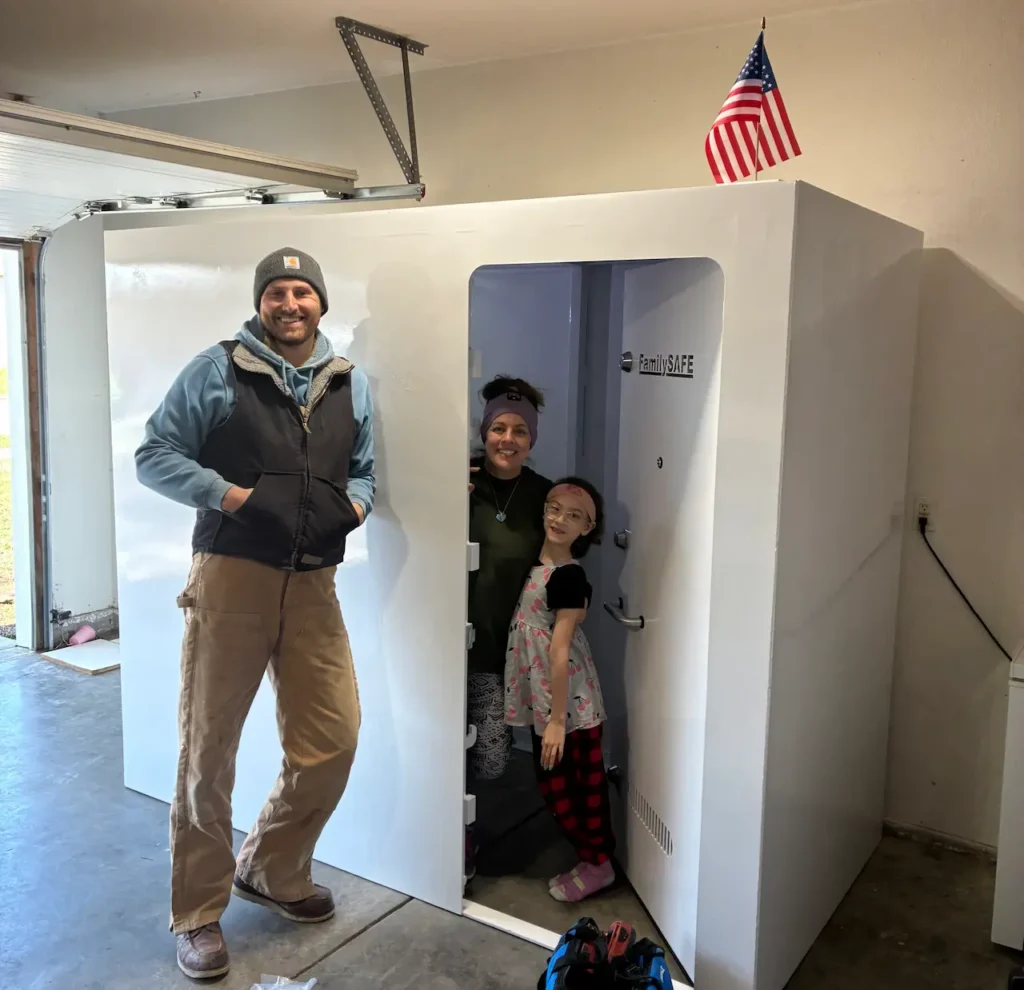
At System 1, we proudly install FamilySAFE storm shelters that don’t just meet these standards, but helped shape them.
Understanding FEMA P-361 and ICC-500
FEMA P-361 is a guidance document published by the Federal Emergency Management Agency – the same emergency management agency that coordinates the nation’s response to major disasters. It outlines criteria for designing and constructing safe rooms capable of providing what FEMA describes as “near-absolute protection” from tornadoes and hurricanes.
This is the gold standard in storm shelter design, covering everything from structural integrity and wind speed calculations, to continuous load path engineering and windborne debris resistance.
What the Industry’s Most Rigorous Safety Benchmarks Actually Require
FEMA P-361 applies to both residential safe rooms and large community shelters used by schools, emergency operations centers and public facilities. ICC-500 is the companion code standard developed by the International Code Council (ICC) in partnership with the National Storm Shelter Association (NSSA). Unlike FEMA P-361, which is a guidance document using recommended best practices, ICC-500 is an enforceable code standard incorporated into the International Building Code (IBC). In practical terms, this means that where ICC standards are adopted by local or state authorities, compliance with ICC-500 is legally required – not optional.
Together, these two frameworks form the backbone of modern storm shelter construction across the country.
Not All Compliance Is Equal
While the two documents share much of the same DNA – FEMA participated directly in developing both the original ICC-500 and its subsequent editions – some meaningful differences exist.
FEMA P-361 requires shelters to be designed for a wind speed of 250 mph across all locations, whereas ICC-500 allows wind speed criteria to range from 130 mph to 250 mph depending on geographic risk. FEMA P-361 also sets a higher bar for impact resistance: shelters must withstand a 15-pound 2×4 missile fired at 100 mph, representing the kind of windborne debris – broken lumber, fence posts, even vehicle parts – that extreme windstorms generate.
Why FEMA P-361 & ICC-500 Certification Should Be Non-Negotiable
An uncertified shelter is a gamble with lives. Shelters that do not comply with established criteria may look identical from the outside but perform catastrophically differently during a real tornado. Walls that lack sufficient reinforced steel, doors that fail under debris impact, and structures without a proper continuous load path can buckle, separate, or collapse under the force of a violent storm – exactly when occupants are depending on them most.
Historical data on structural failure in tornadoes consistently shows that construction shortcuts lead to death, not just property damage.
What “FEMA Approved” Actually Means
It is important to clarify a common misconception: FEMA does not certify or approve individual products. Federal law prohibits FEMA from endorsing specific manufacturers. Contractors or companies that claim to sell “FEMA-approved” or “FEMA certified” shelters are being inaccurate.
What matters instead is whether a shelter meets or exceeds the criteria outlined in FEMA guidelines, and whether licensed engineers have verified and documented that compliance.
When a shelter meets FEMA P-361 and ICC-500 criteria – certified by qualified engineers with stamped drawings and independent testing as proof – that is the benchmark of genuine storm shelter safety.
Certification Can Also Unlock Grants
Certification can also unlock access to valuable resources. FEMA provides grants to eligible homeowners, schools, and communities to offset the cost of installing compliant shelters. To qualify, a shelter must demonstrate compliance with FEMA P-361 criteria – another reason why choosing a shelter that genuinely meets these standards is so important.
Schools located in high-risk tornado corridors, small businesses serving vulnerable populations, and residential families in areas with a very high probability of extreme wind events can all potentially benefit from these grants – but only with a shelter that is fully compliant.
What Compliance Really Demands in Construction
A shelter that meets FEMA P-361 and ICC-500 criteria is a precisely engineered structure – not simply a reinforced room. The criteria govern materials selection, specifying the gauge and grade of steel used in walls and doors. They require anchoring to a concrete foundation to create a continuous load path from roof to ground, ensuring the entire structure acts as a single unified system rather than separate components that could separate under high winds.
Doors represent one of the most critical elements: they must be independently tested to resist both extreme wind pressure and debris impact, because a door that fails transforms the shelter into a deadly trap.
The standards also address the needs of occupants during extended stays, specifying requirements around ventilation, air quality, and accessibility so that families and community members – including those with limited mobility – can shelter safely. Community shelters serving schools and emergency operations centers must comply with additional capacity and accessibility criteria, reflecting the reality that these structures serve dozens or hundreds of people simultaneously.
Every element, from the thickness of the walls to the air filtration systems, is governed by current knowledge built across decades of post-disaster research and real-world tornado performance data.
FamilySAFE: Helping Write the Rules
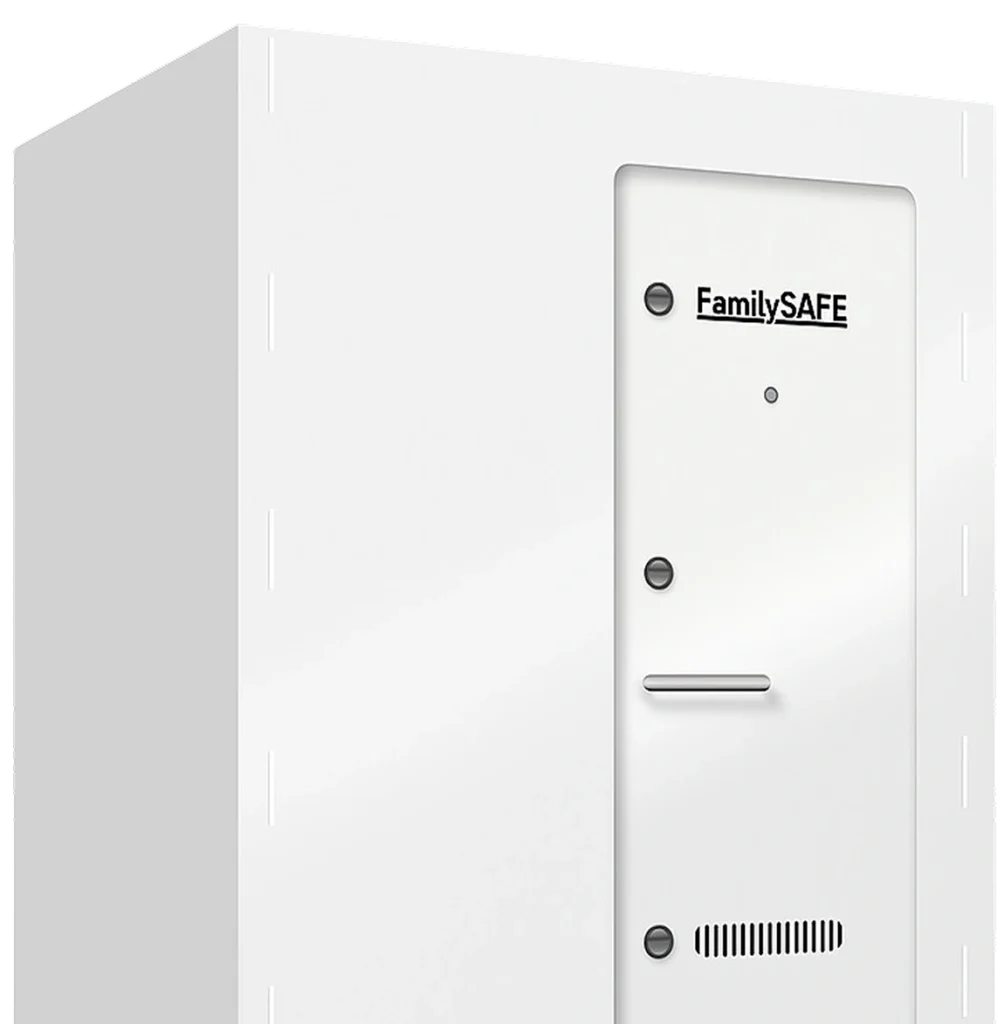
Not every shelter manufacturer complies with FEMA P-361 and ICC-500 – but FamilySAFE does more than comply. FamilySAFE helped create them.
As an original founding member of the National Storm Shelter Association, FamilySAFE was at the table when the industry’s foundational codes and safety practices were developed. This is more than a historical footnote. It means that FamilySAFE’s above-ground steel shelters were engineered with deeper insight into what these criteria are designed to prevent than any other shelter company that simply builds to a minimum standard.
FamilySAFE is also the only shelter company granted permission to conduct occupied testing at Texas Tech University’s National Wind Institute – the research institution whose storm shelter work directly informed FEMA’s guidance, and the development of ICC standards.
Every FamilySAFE unit is fully engineered with stamped drawings provided by licensed engineers, ensuring complete documentation of compliance for homeowners and facilities seeking FEMA grant funding. The result is a shelter that doesn’t just pass testing on paper: it has withstood direct hits from EF4 and EF5 tornadoes in real-world examples across the country, with no reported structural failure and no loss of life among occupants.
That is the most powerful proof of all.
Why System 1 Is the Region’s Leading FamilySAFE Installer
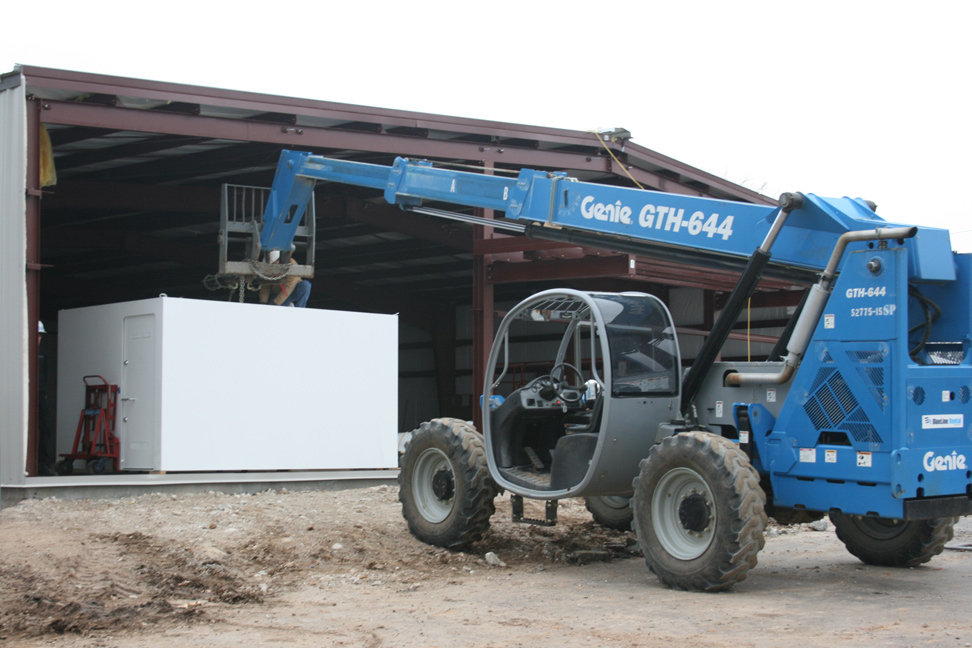
Choosing the right shelter is only half the battle. A shelter that meets every certification criterion on paper can still underperform if it is not correctly installed. A poorly anchored shelter loses its continuous load path. An incorrectly fitted door may not achieve the impact resistance it was designed and tested for.
Installation quality is as critical as the product itself – and this is where we, at System 1, are proud to set the standard for our region.
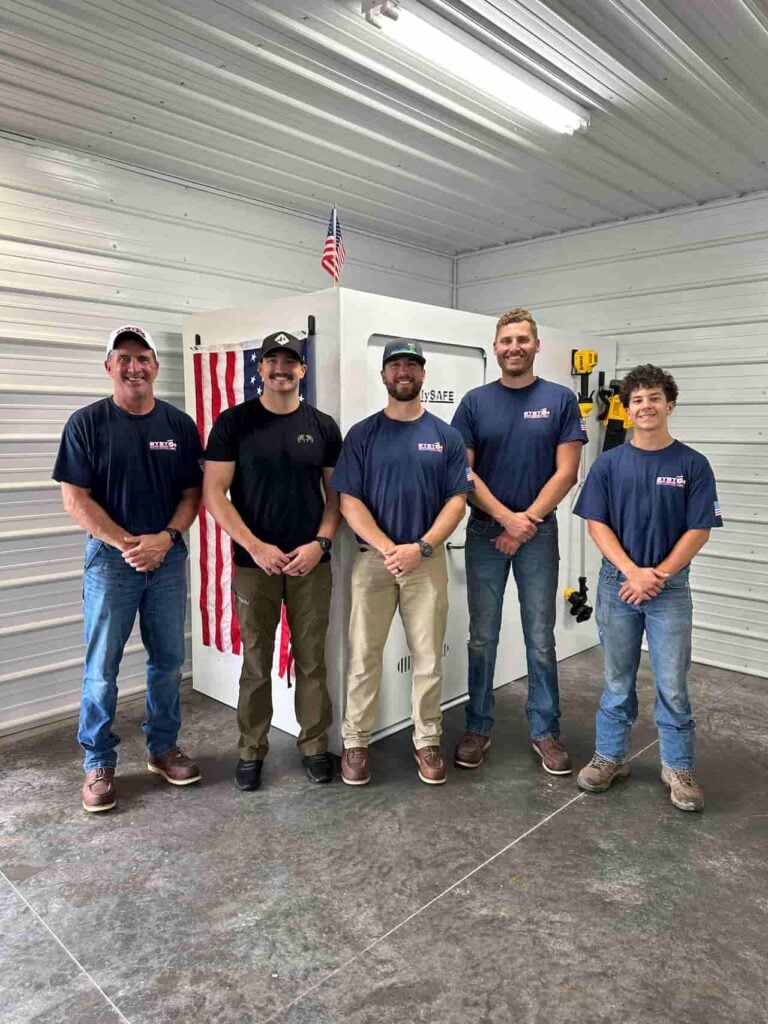
As the leading FamilySAFE storm shelter installers serving homeowners, schools, and small businesses across the area, our team brings deep expertise in every aspect of the installation process. We work closely with engineers to ensure every shelter we install is correctly anchored to a concrete foundation, correctly sealed against the structure, and fully documented for compliance.
Whether you are a family looking to protect your loved ones, a school seeking to provide safety for students and staff, or a business serving the community, we provide the professional guidance, installation precision, and ongoing support that FEMA P-361 and ICC-500 compliance demands.
Stay Safe. Stay Informed. Stay Protected.
Tornadoes and hurricanes do not give warnings long enough to improvise. When violent storms strike, the only thing standing between your family and danger is the shelter you chose months or years before the sky turned green. FEMA P-361 and ICC-500 certifications are not bureaucratic checkboxes – they are the product of decades of science, engineering, and hard lessons learned from some of the most destructive extreme wind events in this country’s history.
They exist to save lives, and a shelter that genuinely meets them does exactly that.
Reach Out To Us Today
Don’t settle for a shelter that claims safety without proof.
Contact us to learn more about our FamilySAFE storm shelters, request a free quote, and connect with our team of experts who can help you find the right solution for your home, school, or property.
Because when the storm comes, the only peace of mind that matters is knowing your shelter was built – and installed – to withstand it.